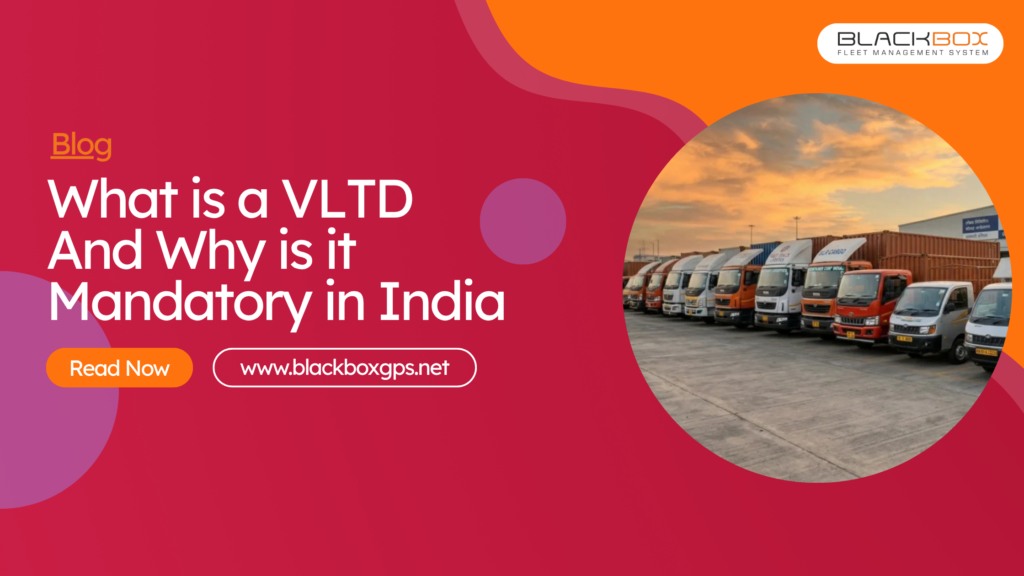
What is a VLTD and Why is it Mandatory in India: Nowadays, vehicle safety, government compliance, and real-time monitoring are essential, owing to millions of commercial vehicles operating every day. To improve individuals’ as well as vehicles’ safety, the government introduced GPS tracking systems. Hence, school buses, pubic trasportation, commercial vehicles, and logistics fleets are heavily dependent on the latest GPS tracking systems for better security and visibility. In this advanced technological era, VLTD (Vehicle Location Tracking Device) is introduced to monitor the real-time location, route history, speed, and movement of any vehicle.
It is engineered according to the AIS 140 guidelines. This smart device helps transport operators improve safety, enhance operational efficiency, meet legal authorities, and monitor fleet movement. In this blog, we will provide you with complete information about what is a VLTD and why is it mandatory in India, including its features and benefits.
What is a VLTD?
VLTD(Vehicle Location Tracking Device) is the latest GPS-based tracking system. It is installed inside vehicles to monitor speed, real-time location, route, and movement of the vehicle. It is designed by following all the standards of AIS 140. The AIS 140 stands for Automotive Industry Standard 140, which was introduced by the ARAI(Automotive Research Association of India) under the Ministry of Road Transport and Highways (MoRTH) for public safety and vehicle tracking. A VLTD uses technologies, like
- GSM/GPRS connectivity
- Global Positioning System(GPS)
- Emergency alert systems
- Fleet monitoring software
- Real-time data transmission
Why Was VLTD Made Mandatory by Government in India?
To strengthen road safety as well as improve transport management, Indian legal authorities introduced VLTD installation. It is becoming mandatory owing to increasing concerns related to passenger security, theft, vehicle misuse, and inefficient fleet operations. Here are the major or detailed reasons why VLTD is important in India
How Does a VLTD Work?
The working process of the VLTD device is too simple. Here are certain steps of how the VLTD device works:
Step 1
All the data is collected, including location and movement.
Step 2
Data transmission through GSM/GPRS networks is done.
Step 3
Then, data is monitored through web or mobile applications.
Step 4
The system sends alerts for overspeeding, route deviations, and emergencies.
Which Vehicles need VLTD in India?
- School buses
- Public transport buses
- Commercial taxis
- Tourist vehicles
- Logistics & fleet vehicles
- Employee vehicles
- State transport corporation buses
Benefits of an AIS 140 VLTD
The latest AIS 140 devices of BlackBox GPS Technology provide advanced tracking, which helps fleet managers in improving compliance and operational efficiency. Have a look at the benefits of advanced VLTD solutions:
Real-Time Vehicle Monitoring
With the installation of the VLTD device, it becomes easy for the fleet operators to monitor their vehicles 24/7. This real-time vehicle monitoring helps in improving overall efficiency for fleet industries. Here is the data that is provided by this monitoring device:
- Route optimization
- Faster dispatching
- Live location tracking
- Driver management
- Better operational control
Enhanced Passenger Safety
One of the main reasons behind AIS 140 implementation is passenger safety. Vehicles are used by numerous individuals on a daily basis, which requires continuous monitoring to ensure safer journeys, especially for school buses, public buses, and women’s transportation services. Look at the authorities that are helped by VLTD devices:
- Monitor route deviations
- Track vehicle location in real time
- Improve overall transport security
- Respond quickly during emergencies
Reduction in Vehicle Theft & Misuse
Vehicle theft, as well as unauthorized vehicle usage, are the most common concerns for fleet operators. But with the help of the VLTD system, it becomes easy for the fleet owners to track the vehicles continuously. This device offers instant alerts and makes it easier to locate stolen vehicles. Fleet industries can
- Receive tamper alerts
- Track suspicious movement
- Access trip history records
- Monitor unauthorized usage
Faster Emergency Response
There are emergency or panic buttons in vehicles, which are AIS 140 compliant. This software is advantageous in case of medical emergencies, accidents, or unsafe situations. With the help of this device, drivers or passengers can send instant alert buttons. This faster emergency response shares vehicle location, driver information, and emergency status.
Government Compliance
In India, many state transport departments have made AIS 140-certified VLTD installation crucial for passenger as well as commercial vehicles. But, if the vehicle is without the installation of the VLTD device, then they have to face:
- Penalties
- Legal non-compliance
- Permit cancellation
- Fitness certificate issues
Difference Between a Normal GPS Tracker and a VLTD
| Feature | Normal GPS Tracker | Vehicle Location Tracking Device (VLTD) |
| Purpose | Basic vehicle location tracking | Vehicle tracking with compliance and safety features |
| AIS 140 Certification | Not certified | AIS 140 certified |
| Panic Button Integration | Typically unavailable | Integrated as per standards |
| NavIC/IRNSS Support | Generally not supported | Supported |
| Government Compliance | Does not meet mandatory transport regulations | Fully compliant with government requirements |
| Emergency Alert Functionality | Limited or unavailable | Real-time emergency alert system |
| Hardware Standards | Manufacturer-dependent | Approved and standardized hardware |
| Transport Department Approval | Not accepted for regulatory compliance | Approved for mandatory use |
Key Features of an AIS 140 VLTD Device
The latest VLTD systems are engineered using advanced features. These advanced features are created for safety as well as fleet management.
- Speed Monitoring: The beneficial software tracks over-speeding and driving behavior.
- Real-Time GPS Tracking: This device helps in tracking the vehicle’s live location and movement.
- Route Playback: Fleet operators can complete access to trip history as well as route playback reports.
- Tamper Alerts: AIS 140 devices can detect unauthorized tampering attempts.
- Emergency Panic Button: Drivers or passengers can use the panic button for immediate alerts.
- Geo-Fencing: Users can create virtual boundaries and get alerts when vehicles enter or leave specific areas.
- Centralized Monitoring: Fleet operators can track multiple vehicles from a single dashboard.
How BlackBox GPS Technology Supports AIS 140 Compliance
Our company focuses on building reliable, advanced, and future-ready AIS 140 solutions that are designed with:
- IRNSS/NavIC support
- Real-time tracking
- Driver behavior analytics
- Fuel monitoring compatibility
- Advanced telematics features
- Rugged industrial-grade hardware
Common Myths About VLTD Devices
Look at the many misconceptions surrounding AIS 140 devices mentioned below:
“Any GPS device is enough.”
Only AIS 140-certified devices are approved for commercial vehicles by the government.
“VLTD is only for tracking.”
It is wrong. The latest VLTD systems support safety, analytics, compliance, and operational management.
“VLTD only benefits government authorities.”
Fleet managers also benefit significantly through better monitoring, operational efficiency, and fuel savings.
“VLTD installation is complicated.”
Most installations can be completed within 30 to 60 minutes by trained as well as experienced technicians.
Wrapping Up!
VLTD is considered the most important GPS tracker, which is a smart safety. It is engineered to improve passenger protection and vehicle security. The government made AIS 140-compliant VLTD devices necessary for passenger safety. This advantageous device offers numerous benefits to businesses as well as public transport operators. With the help of the VLTD device passenger feel safe and make best journey.