How AIS 140 VLTD Works in Commercial Vehicles: The transportation industry is the backbone of India’s economy. Every day millions of vehicles are carrying passengers, goods, and supplies across cities, states, and rural areas. As the transport network is growing, it is very important to ensure the safety of vehicles, follow rules, and maintain efficient operations. This is where AIS 140 VLTD technology plays a pivotal role in public and commercial vehicles. AIS 140-compliant VLTDs are widely used for monitoring, safety, and government compliance. With the help of the AIS 140 VLTD device, fleet managers can monitor their vehicles properly in real time while enhancing operational efficiency.
However, many vehicle owners, fleet operators, and transporters still wonder: How does an AIS 140 VLTD actually work inside a commercial vehicle? In this blog we will learn about the complete working of AIS 140 VLTD devices.
What is an AIS 140 VLTD Device?
AIS 140 (Automotive Industry Standard 140) VLTD (Vehicle Location Tracking Device) is a government-approved GPS tracking system. This system is engineered for commercial as well as passenger vehicles according to the issued guidelines of the Ministry of Road Transport and Highways (MoRTH). The AIS 140 VLTD device offers:
- Route monitoring
- Vehicle movement visibility
- Real-time vehicle tracking
- Driver activity monitoring
- Emergency alert support
Why was AIS 140 introduced?
AIS 140 was introduced to improve passenger safety and vehicle monitoring. After a lot of safety incidents in public transport, the government saw the need for real-time tracking and faster emergency responses.
AIS 140 provides a standard system that helps:
- Track vehicles in real time
- Improve emergency response
- Increase accountability
- Support transport authorities in monitoring vehicles
- Give fleet operators better control and insights
Today, AIS 140 is mandatory for many commercial vehicles like buses, taxis, school transport, and other public service vehicles
Core components of an AIS 140 VLTD
An AIS 140 device is made up of several parts that work together to track and monitor vehicles.
- Positioning system: Uses GPS and NavIC satellites to find the exact location of the vehicle
- Communication module: Uses mobile networks to send data to cloud servers
- Processor: Collects, processes, and stores vehicle data
- Backup battery: Keeps the device working even if the main power is cut
- Panic button: Allows emergency alerts from the vehicle
How AIS 140 VLTD Works Step by Step
The AIS 140 VLTD device provides real-time vehicle tracking as well as monitoring. This system works through a combination of GPS technology, tracking software, communication networks, and monitoring systems. Here are multiple steps of how AIS 140 VLTD works in commercial vehicles:
Step 1: GPS Satellite Connection
Install the AIS 140 VLTD device inside the commercial vehicle, which connects with GPS satellites. The GPS collects pivotal vehicle data, which is updated continuously while the vehicle is operating, such as:
- Vehicle speed
- Travel distance
- Current location
- Route position
- Direction of movement
Step 2: Role of GPS and NavIC in AIS 140 Devices
AIS 140 devices use satellite positioning for accurate vehicle tracking. They also support an Indian-owned system called NavIC (navigation with Indian constellations). By using both systems, they help to improve location accuracy, signal strength and reliability
- Uses GPS and NavIC (Navigation with Indian Constellation)
- Gives better location accuracy
- Improves signal and reliability
- Works well in all conditions
- Helps in continuous vehicle tracking
Step 3: How to reach the fleet owner
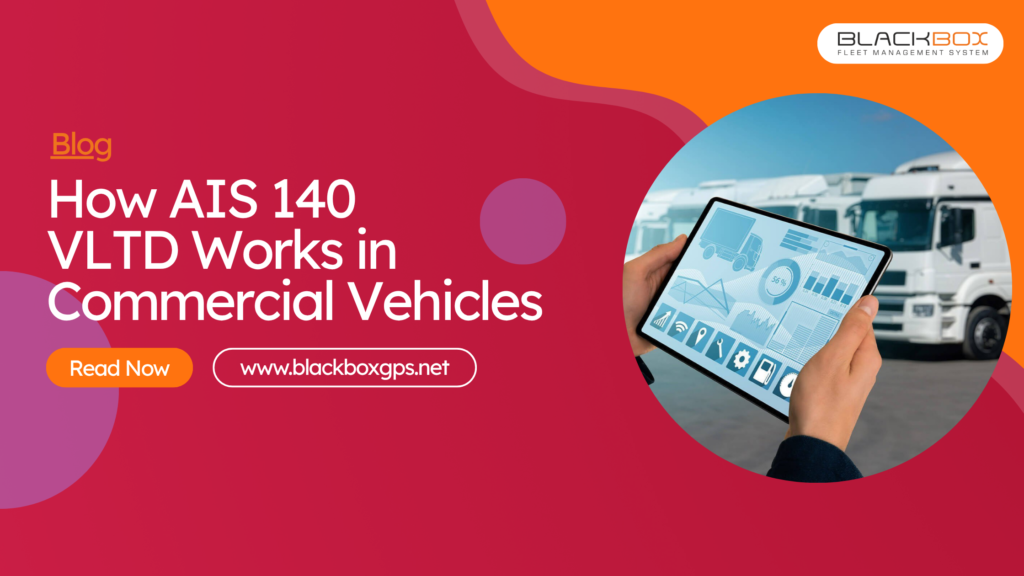
The device first collects data from satellites, then the communication module sends this information to the cloud servers through mobile. The cloud platform processes the incoming data and displays it through dashboards, maps, reports, and alerts.
Fleet managers can view the following:
- Live vehicle locations
- Route history
- Distance traveled
- Driver performance
- Vehicle status
- Alert notifications
Step 4: Emergency Alert Functionality
AIS 140-compliant systems include a panic button, which supports in emergency situations, like accidents and passenger safety threats. Passengers or drivers can press this button, which instantly sends:
- Vehicle location details
- Emergency alerts
- Vehicle identification information
Step 5: Route Monitoring and Geofencing
AIS 140 VLTD systems also include features like route monitoring and geofencing, which allow operators to set virtual boundaries and receive alerts when a vehicle enters or exits these areas.
This feature is widely used for:
- School buses
- Logistics fleets
- Public transportation
- Construction equipment
- Municipal vehicles
Step 6: Fuel Monitoring and Driver Behaviour Tracking
Now most of the modern devices can connect with the fuel sensors and vehicle system to provide operational insights.
Fleet operators can monitor the following:
- Fuel consumption
- Fuel filling events
- Fuel theft incidents
- Mileage performance
The system can detect the following:
- Overspeeding
- Harsh braking
- Rapid acceleration
- Excessive idling
Benefits of AIS 140 VLTD in Commercial Vehicles
The AIS 140 tracking system offers several operational as well as safety advantages for organisations.
- Better Fleet Visibility: Fleet managers can track all the commercial vehicles from a single place.
- Decreased Fuel Wastage: Driver monitoring, as well as route optimization, helps enhance fuel efficiency.
- Improved Passenger Safety: Emergency alert systems enhance safety for passengers and drivers.
- Enhanced Compliance: AIS 140-compliant systems help businesses meet transport department regulations.
- Better Operational Control: Fleet owners can monitor routes, driver performance, and trips more effectively.
- Improved Vehicle Security: Continuous tracking helps reduce theft and unauthorized usage.
Industries That Rely on AIS 140 VLTD
AIS 140-compliant devices are used in the mentioned companies, and these industries can depend on vehicle tracking and driver monitoring for safer as well as more efficient operations:
- School transportation
- Logistics and transportation
- Taxi and cab businesses
- Public transport services
- Tourism transportation services
- Employee transport fleets
Why Choosing a Certified AIS 140 Device Matters
AIS 140 certified devices undergo strict testing to meet government standards. At BlackBox GPS Technologies vehicles, we provide AIS 140-approved solutions with advanced tracking features to help the fleet operator manage vehicles more effectively.
A certified device offers:
- Reliable performance
- Legal compliance
- Secure data transmission
- Accurate tracking
- Emergency response features
Wrapping Up!
The AIS 140 VLTD device combines GPS tracking, emergency alert systems, GSM communication, and live monitoring to enhance commercial vehicle operational control as well as safety. This is the most beneficial device, which fleet managers use to track routes, monitor vehicle movement, enhance passenger safety, and improve driver accountability.